You know the box. One field, one number, no range, no characters. Sometimes it won't even accept a decimal point. You type a figure and you have no idea what's behind it, because the advert didn't publish a band.
Then the email comes. "After careful consideration, we believe your salary expectations do not fully align with the budget for this role, and therefore will not be taking your application further." No conversation. No counter. No indication of what the number should have been.
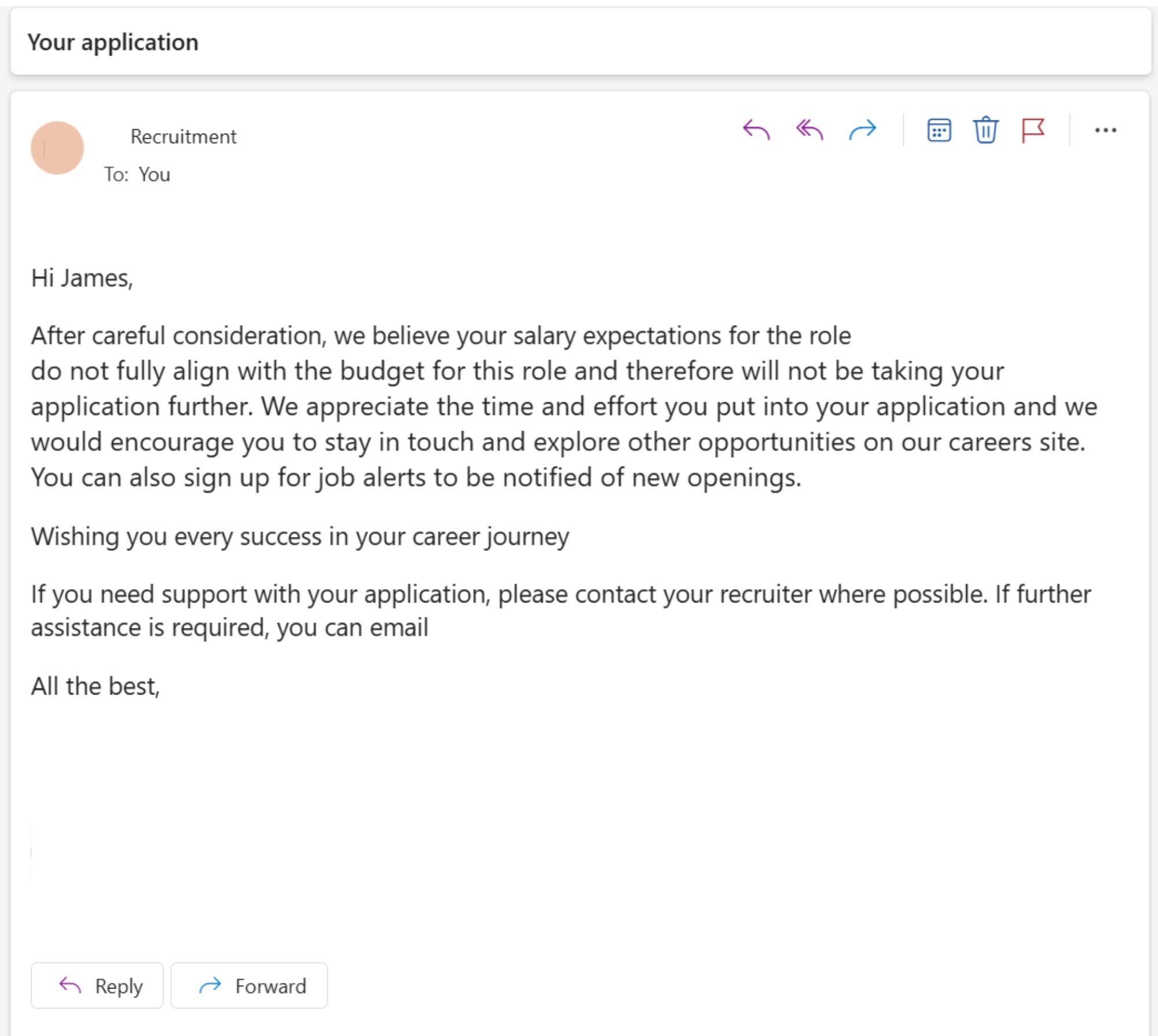
That email arrived in my inbox this week. I run a project management training business and I still take contract roles, because being in them is how I know what this work is actually like now, not what it was like five years ago. I've also sat on selection panels throughout my senior career, so I've seen this from both sides.
What the filter actually tests
Here's what happened. Hundreds of people applied. Somebody has a budget nobody published. Everyone had to guess. The applicants who guessed close enough stayed in. The ones who guessed high went out, before a single person read what they could do.
That's the part that matters. The email says "after careful consideration", and the only thing it mentions is one number typed into one box. The filter didn't test whether you can run the programme. It tested whether you guessed the number in someone's head.
Now think about who survives that. The candidate who guessed within ten percent goes through to interview. They might be the right person. They might not be. The process has no way of knowing, because at the point the decision was made, nobody had looked at the work. Guessing well is not a skill the job requires.
And you were asked to guess with almost nothing to go on. Read most senior adverts back. Provide strong leadership. Drive delivery across a complex portfolio. Build effective relationships with stakeholders. None of that tells you the size of the team, the state of the programme, whether governance exists or whether you're building it from nothing, or whether you're rescuing something already in trouble. Two roles with identical wording can be forty thousand pounds apart in what they actually demand.
So you're pricing something you haven't seen.
What to put in the box
Not your last salary. That anchors you to a job you've already left, and if your last role was underpaid, you carry the underpayment forward.
Not the most you think you can get. Against a hidden ceiling, ambition reads as a mismatch and the system removes you without a word.
Not the lowest you'd accept either. You will never get that back. Once the number is in the system, it becomes the reference point for every conversation that follows.
Put the market midpoint. Look up what that role, in that sector, in that region, at that level, genuinely pays right now. Take the middle of the going rate and put that.
Two reasons. It keeps you in, because the middle of the market is very rarely outside anyone's budget. And you can defend it in any conversation, because it isn't a want, it's evidence. If they ask, you say: that's the market rate for this role at this level. Nobody argues with that. They can only tell you where their budget actually sits, which is the information you needed all along.
Reprice at offer stage
This is the part most people miss.
The box is filled in before you know anything. The interview is where you find out what the job actually is. And an interview runs both ways. While they're deciding about you, you're finding out the scope, the reporting line, the state of the delivery, what's already failed, what they need fixed first, and how much of the role is build rather than run.
By the end of it you know things you could not have known when you typed that number.
So when the offer comes, you're allowed to say so. Something like: "Thank you, I'm glad we got here. When I completed the application I put a figure in before I understood the scope. Having spoken to you and understood what the role actually involves, I think the job is worth this."
That isn't backtracking. It's the only honest sequence available to you. You cannot price work you haven't seen. Any reasonable employer understands that, because they've done the same thing from the other side.
If they say the budget is fixed
Sometimes it is. Now you know, and you can decide with real information instead of a guess. But a fixed salary line is not the end of the conversation, because salary is only one of the things that can move.
Say: "Understood. If the number can't move, can we look at what it's buying?" Then ask about three things.
The scope. If the budget fits a smaller job than the one they described, agree which parts come out, or which parts get support.
A review. Six months in, against deliverables you agree now and put in writing. If you've fixed what they hired you to fix, the number moves then.
The terms. Notice period, working pattern, training budget, title. These often sit outside the salary budget and the hiring manager can agree them without going back for approval.
They may meet you. They may meet you halfway. What they will not do is withdraw the offer because you priced the role accurately after learning what it was. They've already decided they want you. That's why you do it then and not before.
For the employers reading this
If you don't publish the band, you are not protecting your negotiating position. You are removing people before anyone looks at them. The candidate who could have turned the programme around gets filtered out on a guess, and you never learn they applied. Publishing a range costs you nothing, and it means the people who go through are the ones who can do the work.
Know the number before you type it
All of this depends on knowing what the role actually pays right now. Not what it paid three years ago, and not a salary survey averaged across the whole country. What it pays this month, at your level, in your sector.
That's the PM Index: the weekly read on what the UK project market is paying and hiring for, so when you hit that box you're typing a number you can defend. Free every week.